
Most women stare at the bathroom scale like it’s a crystal ball. We want it to tell us our future health, our worth, and whether we should skip dessert tonight. But the scale often lies because it doesn’t know the difference between muscle, water, and fat. A BMI calculator for women offers a better starting point than a random number on a dial, though it still has its quirks.
I remember my own battle with the numbers. I once gained five pounds while training for a 10k race. I felt stronger than ever, but the scale screamed “weight gain.” That experience taught me that weight alone tells a boring, incomplete story. We need better tools to understand our bodies. Why settle for a single data point when you can see the whole picture?
This guide breaks down everything you need to know about BMI. We will explore how it works, where it fails, and which other tools actually matter for your health. Let’s get real about what those numbers on the screen actually mean for your daily life.
What exactly is a BMI calculator for women anyway?
BMI stands for Body Mass Index. It acts as a screening tool that uses your height and weight to estimate your body fat. Think of it as a quick “health snapshot” rather than a full-length movie. Doctors use it because it’s fast, cheap, and generally points in the right direction for most people.
The standard formula remains the same for everyone, but a BMI calculator for women focuses on the specific ranges that apply to the female body. Women naturally carry more body fat than men. Our bodies need that fat for hormonal health and reproductive functions. A “healthy” range for us looks slightly different in a biological sense, even if the math stays the same.
You can find your own number right now using a BMI calculator for women. This tool gives you a category ranging from underweight to obese. Does it tell you everything? No. Does it provide a useful baseline? Absolutely. FYI, knowing your baseline helps you track changes over months instead of obsessing over daily fluctuations.
The math behind the magic
The calculation is simple. You divide your weight in kilograms by your height in meters squared. If you hate math as much as I do, you probably just use an online tool. These tools do the heavy lifting so you don’t have to dust off your old high school calculator.
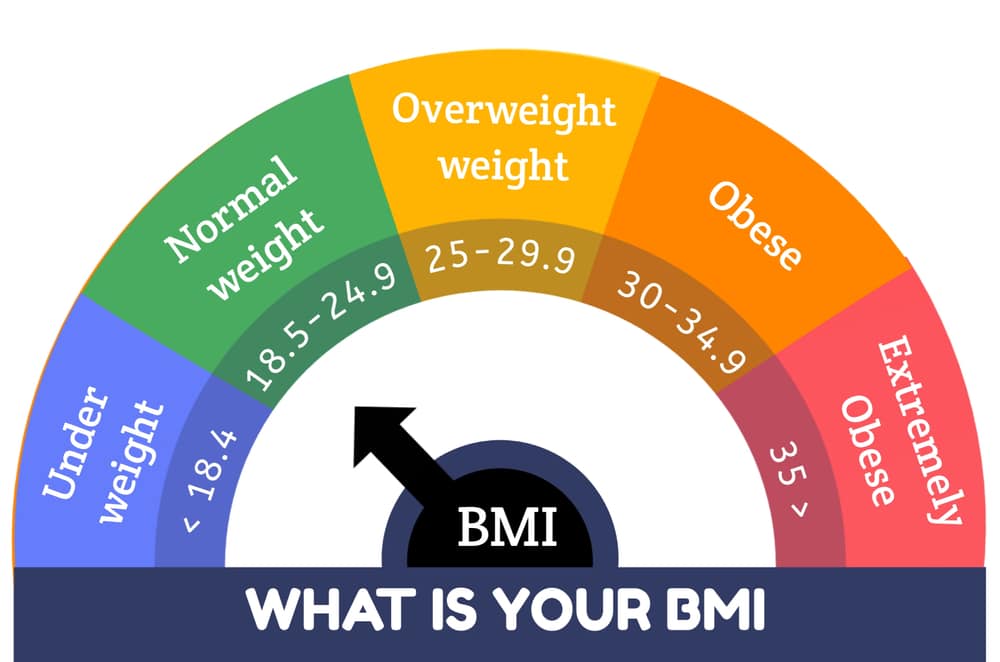
The resulting number places you into one of several categories. Most health organizations use these standard ranges to define where you stand. While these numbers look set in stone, remember that they don’t account for your specific body composition.
| BMI Range | Category |
|---|---|
| Below 18.5 | Underweight |
| 18.5 – 24.9 | Normal weight |
| 25.0 – 29.9 | Overweight |
| 30.0 and Above | Obese |
Why standard BMI often fails women
Standard BMI ignores muscle mass. Muscle weighs more than fat but takes up less space. If you lift weights and carry a lot of lean muscle, a basic calculator might label you as “overweight.” This happened to a friend of mine who competes in CrossFit. She has abs of steel, yet her BMI says she needs to lose weight. Does that make any sense? 🙂
Women also experience massive shifts in body composition during different life stages. Pregnancy, menopause, and even your monthly cycle change how your body holds onto water and fat. A static formula doesn’t care about your hormones, but your body certainly does. BMI also fails to show where you carry your fat.
Carrying fat in your hips (the pear shape) usually poses fewer health risks than carrying it around your midsection (the apple shape). BMI cannot see your waistline. It only sees the total mass. This is why you should always pair your BMI results with other measurements to get the full story of your physical health.
How to use a BMI calculator for women like a pro
To get an accurate reading, measure yourself in the morning. Your height is tallest right after you wake up before gravity compresses your spine. Your weight is also most stable before you eat breakfast or drink a gallon of coffee. Consistency matters more than the actual number.
Don’t just look at the BMI. Use an ideal weight calculator to see what a healthy range looks like for your specific height. This gives you a target that feels realistic rather than chasing a number from a magazine. Are you aiming for a number that supports your energy levels, or just a number that looks good on paper?
Focus on trends. If your BMI creeps up while your clothes fit tighter, you might be gaining fat. If your BMI stays the same but your waist gets smaller, you are likely building muscle. That’s a massive win! Use the tool as a compass, not a judge.
Comparing BMI to body fat percentage
If BMI is the “quick sketch” of your health, body fat percentage is the “high-definition photograph.” Body fat percentage tells you exactly how much of your weight comes from adipose tissue versus lean mass. This distinction changes everything for women who exercise regularly.
A woman with a BMI of 26 might have 22% body fat (very athletic) or 35% body fat (higher risk). You can use a body fat calculator to find a more precise measurement. This tool usually requires a few extra measurements, like your waist, hip, and neck circumference. It takes more effort but yields much better insights.
We need a certain amount of “essential fat” to maintain our periods and bone health. Dropping too low can cause just as many problems as carrying too much. Most healthy women fall between 21% and 32% body fat. Athletes might drop lower, while those in the “acceptable” range might sit slightly higher.
Measuring health beyond the scale
Since BMI has its limits, what else should you track? I highly recommend checking your waist-to-hip ratio. This measurement tells you if you are storing “visceral fat” around your internal organs. This type of fat increases your risk for heart disease and type 2 diabetes much more than leg or arm fat.
Grab a measuring tape and find the narrowest part of your waist and the widest part of your hips. Then, use a waist-to-hip ratio calculator to see your score. For women, a ratio of 0.85 or lower generally indicates good health. It’s a simple check that provides a huge amount of data about your metabolic health.
| Health Risk | Waist-to-Hip Ratio (Women) |
|---|---|
| Low | 0.80 or below |
| Moderate | 0.81 – 0.85 |
| High | 0.86 or above |
BMI during pregnancy and aging
Pregnancy throws the BMI calculator for women out the window. You are growing a human! Your weight includes the baby, the placenta, extra blood volume, and amniotic fluid. Doctors track weight gain during pregnancy, but they don’t use standard BMI charts to judge your health during those nine months.
As we age, our body composition shifts naturally. After menopause, women often lose muscle mass and gain fat around the middle. This “middle-age spread” can bump your BMI up even if your eating habits don’t change. It’s frustrating, but it’s also biological. Keeping an eye on your basal metabolic rate (BMR) helps you understand how many calories your body burns at rest as you get older.
Older adults actually benefit from a slightly higher BMI. Research suggests that for people over 65, a BMI between 25 and 27 might actually protect against bone loss and frailty. Don’t panic if the number shifts slightly as the candles on your birthday cake increase. Context is everything.
Practical steps to improve your numbers
If your BMI suggests you need to make a change, don’t start a crash diet. Those never work long-term. Instead, look at your total daily energy expenditure. This number tells you how many calories you actually burn based on your activity level. You can calculate this using a TDEE calculator.
- Prioritize protein: Protein helps you keep your muscle while you lose fat.
- Lift heavy things: Resistance training boosts your metabolism and improves your body composition.
- Walk more: Simple daily movement burns more calories over time than a single intense gym session.
- Sleep 7-8 hours: Lack of sleep spikes cortisol, which makes your body cling to belly fat.
- Drink water: Sometimes your brain confuses thirst with hunger.
Small, sustainable changes beat radical overhauls every single time. I used to think I had to run marathons to see progress. It turns out that consistent strength training and better sleep did more for my BMI than endless cardio ever could. What one small habit can you change today?
Frequently Asked Questions
Is BMI the same for men and women?
The mathematical formula remains the same, but the interpretation differs. Women naturally have more body fat, so a woman with the same BMI as a man will likely have a higher body fat percentage. Doctors consider these biological differences when evaluating your health.
Can I have a high BMI and still be healthy?
Yes, especially if you have a lot of muscle. Athletes often fall into the “overweight” category despite having very low body fat. Always look at your blood pressure, cholesterol, and blood sugar levels alongside your BMI to get a clear picture.
How often should I check my BMI?
Checking once a month is plenty. Your weight fluctuates daily based on salt intake, hydration, and your menstrual cycle. Checking every day usually leads to unnecessary stress and doesn’t show real progress.
Does age affect BMI accuracy?
Yes. BMI tends to underestimate body fat in older adults because they often lose muscle mass. For younger people, it might overestimate fat if they are very active. It is most accurate for “average” adults with moderate activity levels.
What is a healthy BMI for a woman?
A BMI between 18.5 and 24.9 is generally considered healthy. However, your doctor might suggest a different target based on your frame size, ethnicity, and overall health history. Don’t treat 24.9 as a “cliff” you are about to fall off.
Why does my BMI increase during my period?
Hormonal shifts cause your body to retain water. This can add 3 to 5 pounds to the scale almost overnight. This isn’t fat gain, and your BMI will return to normal once the bloating subsides. Just ignore the scale during that week!
Also Check:
Simple & Beautiful Foot Mehndi Designs for an Elegant Look
Conclusion
A BMI calculator for women is a helpful tool, but it isn’t the boss of you. It provides a useful starting point for understanding your weight in relation to your height. However, it cannot see your hard-earned muscle, your healthy habits, or your vibrant energy. Use it as one piece of a much larger puzzle.
Combine your BMI with body fat measurements, waist-to-hip ratios, and how you actually feel in your own skin. Health isn’t a single number; it’s a collection of habits that make you feel strong and capable. Stop letting the scale ruin your morning and start using these tools to build a healthier version of yourself. You deserve a health strategy that looks at the whole woman, not just a ratio on a chart.
Technical Resources & References
- Body Mass Index (BMI): A value derived from the mass and height of a person, used as a heuristic proxy for human body fatness.
- Basal Metabolic Rate (BMR): The rate of energy expenditure per unit time by endothermic animals at rest.
- Adipose Tissue: A specialized connective tissue that functions as the major storage site for fat in the form of triglycerides.
- Visceral Fat: Body fat that is stored within the abdominal cavity and is therefore stored around a number of important internal organs.
- Total Daily Energy Expenditure (TDEE): The total number of calories that your body burns in a 24-hour period, including exercise.
- Waist-to-Hip Ratio: The dimensionless ratio of the circumference of the waist to that of the hips, used as an indicator of health.














Leave a comment