
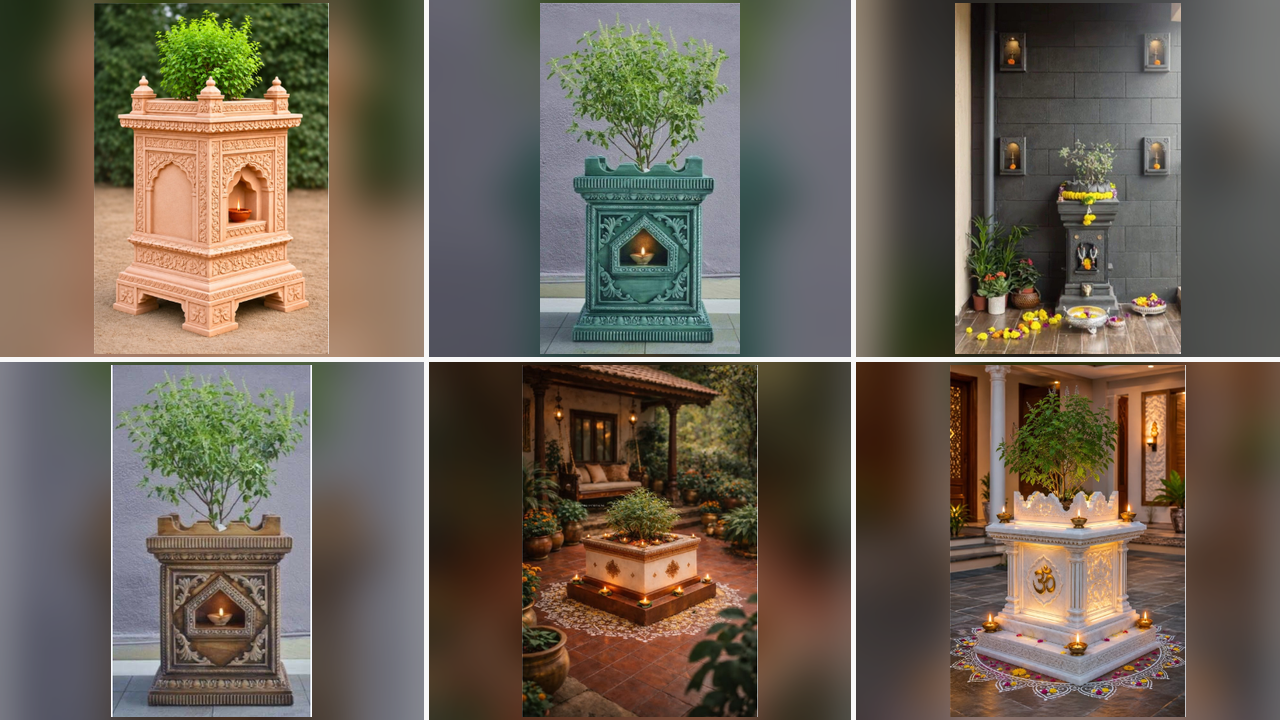
A Tulsi plant deserves a spot where you can see it, care for it and enjoy the little rituals around it. And the right tulasi kota can make even a plain corner feel thoughtfully arranged.
These 10 tulasi kota ideas show how much the design can change with the pedestal’s shape, finish, carving and surrounding space. Some have traditional temple-style arches. Others use dark stone-style surfaces, white decorative bases or compact designs that could fit beside a balcony wall.
I especially like designs with a dedicated diya niche. They give the pedestal a clear focal point and make the arrangement look complete even with minimal decoration.
Look through the images in order. Each one has a different detail worth borrowing, whether you’re choosing a ready-made Tulsi stand, planning a custom pedestal or decorating an existing Tulsi corner.
1. Terracotta-colored tulasi kota with temple-style carvings
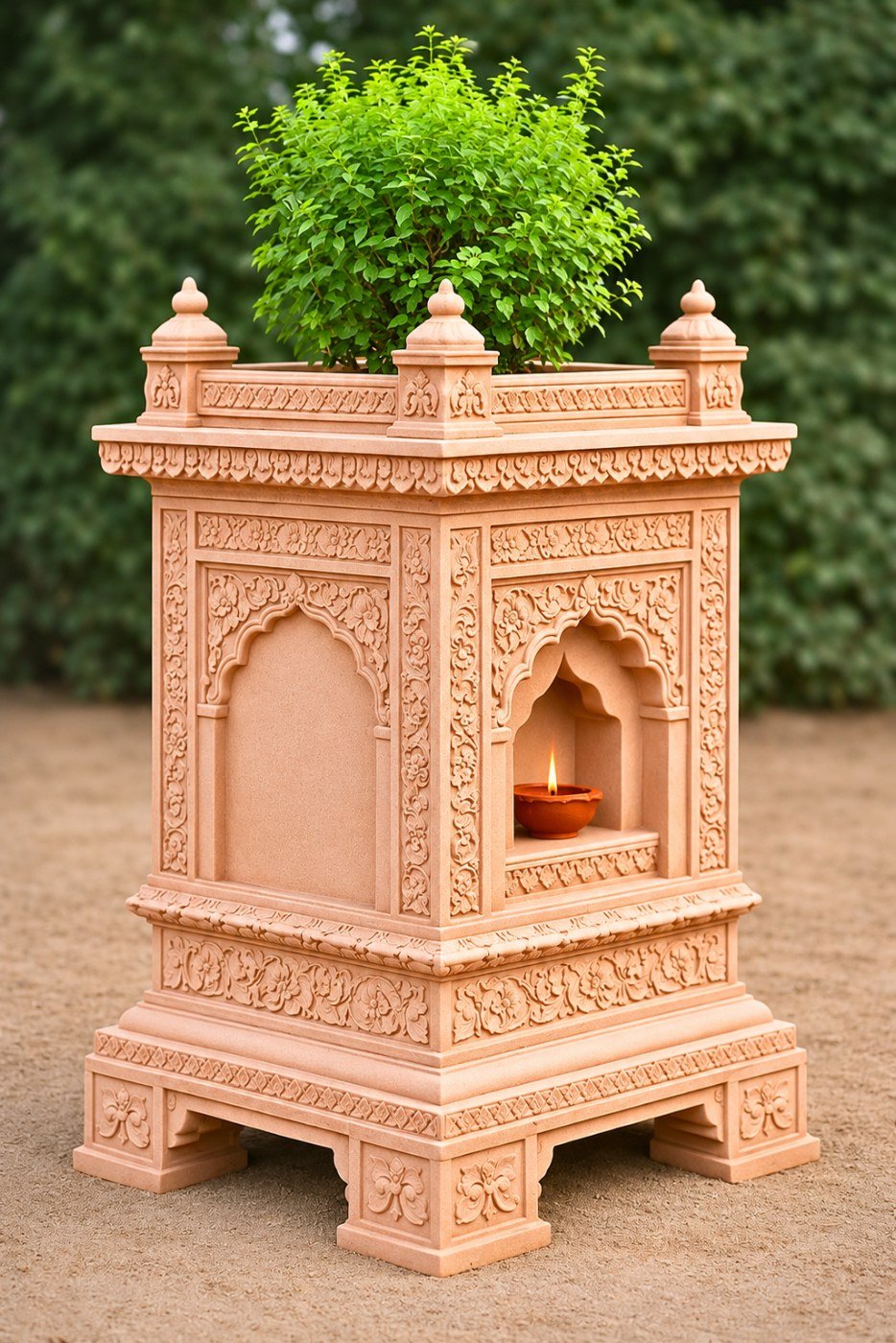
This tulasi kota has a warm peach-colored finish and the look of a miniature temple. The square pedestal is covered with decorative patterns, with small pillar-like details around the upper section and a raised border beneath the plant.
The most attractive part is the arched opening on the front-right side. A small lit diya sits inside, framed by carved details. The neighboring side has a similar arch-shaped recessed panel, giving the structure a balanced appearance.
And look at the base. Four raised feet lift the main body above the ground, while the stepped molding makes the pedestal appear more substantial.
The bright green Tulsi foliage looks particularly good against the earthy peach color. There’s enough visual contrast for the carved patterns to remain visible without competing with the plant.
This is a lovely reference for a traditional courtyard or a garden-facing veranda. If you’re getting a similar design made, ask for a level planting area, proper drainage and an accessible diya compartment. The photograph doesn’t establish what the pedestal is made from, so choose the material according to where you’ll place it.
I’d keep the surrounding decorations simple. The carvings already do plenty of work.
2. Teal green tulasi kota with a built-in diya niche
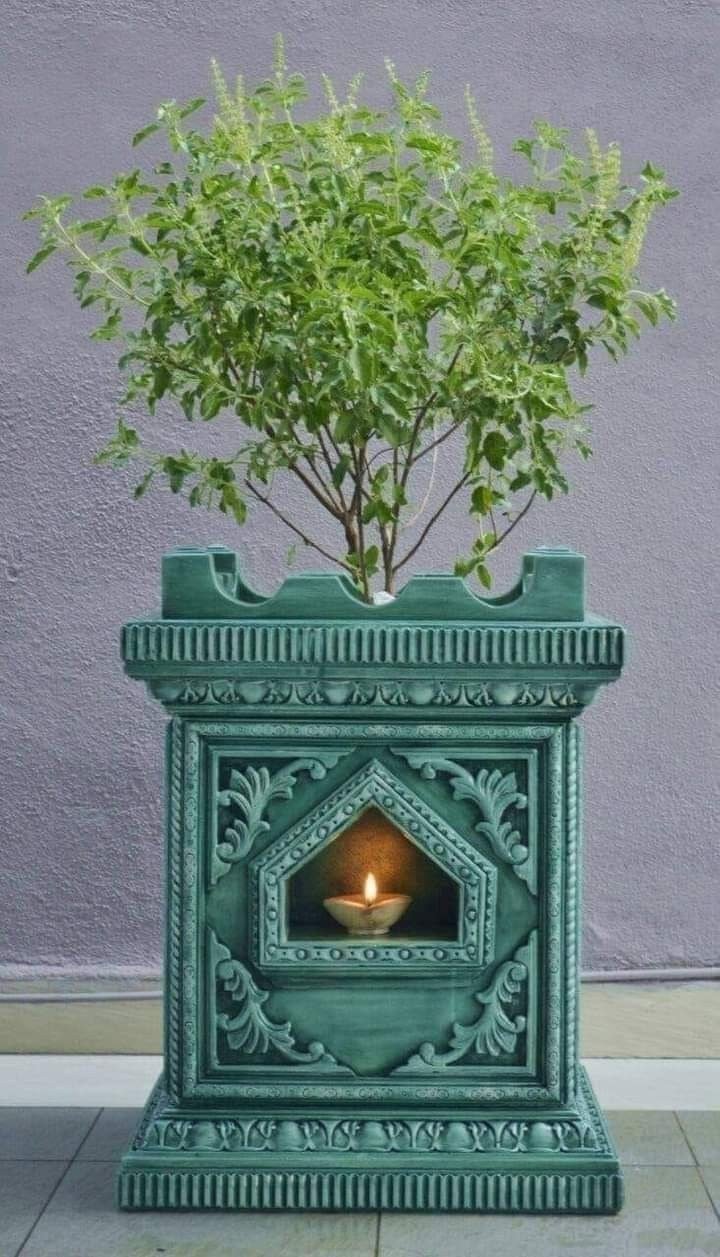
A deep teal green finish gives this tulasi kota a completely different character. It has the shape of a traditional square pedestal, but the unusual color makes it appealing for a contemporary home.
The front panel has a pointed arch-shaped niche with a glowing diya inside. Surrounding it are raised floral patterns, a decorative frame and a solid rectangular base.
The upper rim has closely spaced vertical grooves. That small detail adds texture and visually separates the planting section from the carved body below.
I like how the gray wall behind the pedestal lets the green finish stand out. The Tulsi plant has a slender trunk with several leafy branches, so the foliage spreads above the decorative top.
For a similar setup, a plain background is a smart choice. White, light gray or a muted neutral wall would allow the pedestal’s color and carved details to remain the main attraction.
This design is worth considering for a covered balcony, veranda or a small dedicated pooja corner with suitable natural light. Before buying a painted or colored pedestal, check whether its finish can handle direct sunlight and regular watering.
One practical point: the diya niche is relatively enclosed. If you plan to use a real flame, check that the opening provides safe clearance and ventilation.
3. Traditional tulasi kota with brass-style lamps and kolam
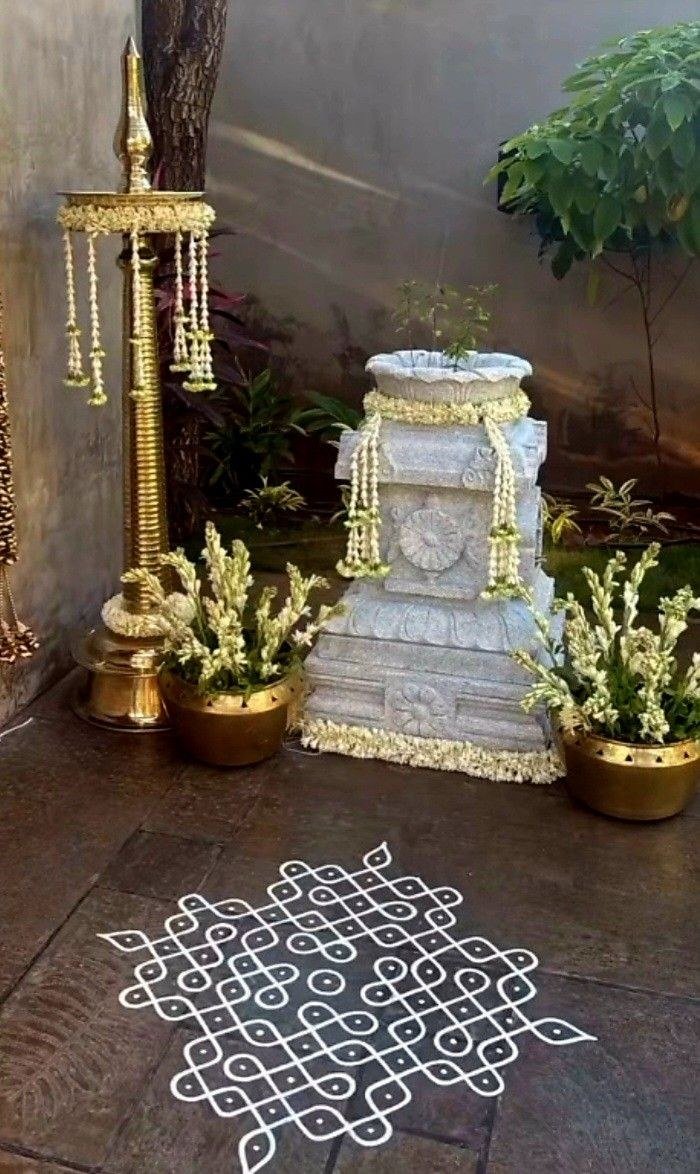
This arrangement gets its character from everything placed around the Tulsi pedestal.
The kota itself is a compact gray structure with a stepped base and a small plant on top. White flowers or floral decoration sit around its upper edge, while hanging ornaments descend along the front.
To the left is a tall traditional lamp arrangement with a gold-toned finish. Several small vessels holding plants or greenery sit nearby. A white geometric kolam occupies the dark floor in front, giving the whole corner a ceremonial appearance.
The contrast is lovely. The muted gray pedestal stays visually quiet while the gold-toned lamps and white floor pattern draw your eye around the space.
This is a useful tulasi kota idea if you already own a simple pedestal and want to dress up the surrounding area for a festival or a family pooja.
Start with the floor. A neatly drawn kolam can define the space without adding permanent construction. Then place decorative lamps at a safe distance from the plant and any hanging material.
The photograph shows an outdoor or semi-open corner beside walls, so the arrangement also suggests how an unused courtyard edge might become a dedicated Tulsi spot.
Keep enough room around the pedestal for watering and cleaning. An elaborate floor decoration looks best when the everyday care of the plant remains manageable.
4. Compact black tulasi kota against a modern tiled wall
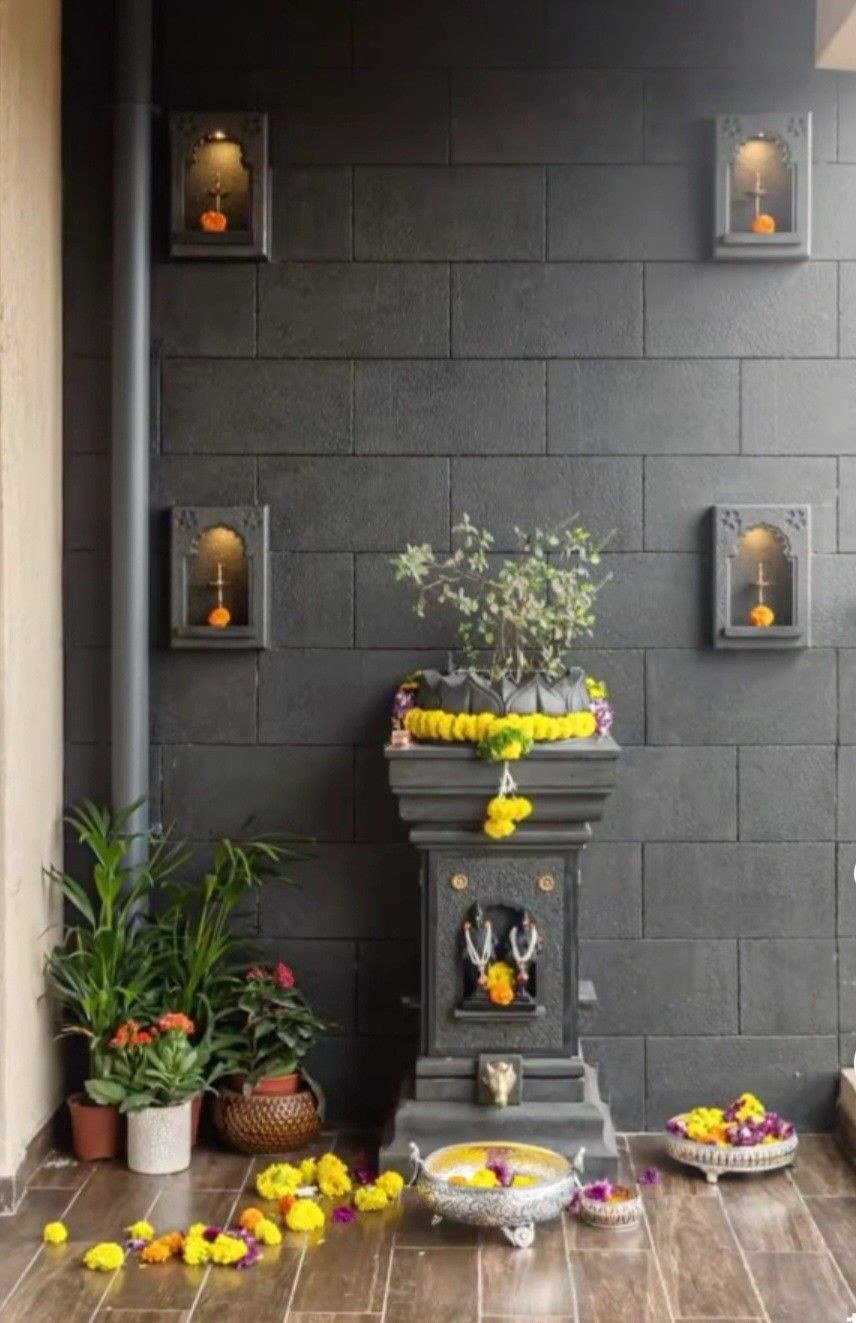
This is one of my favorite tulasi kota ideas for a narrow space.
A dark pedestal sits against a charcoal tiled wall. The Tulsi plant rises from a shallow, rectangular-looking upper container, with yellow flowers arranged along the front edge.
The front of the pedestal has a small decorative diya opening. Above it are circular motifs, and the base has a slightly wider footprint than the central body.
Four small wall niches hold warm glowing lamps. Their arrangement pulls the eye upward and gives the black wall a gentle, symmetrical rhythm.
There are also floor plants, scattered yellow flowers and metal pooja plates around the base. The result feels carefully decorated without requiring a large courtyard.
For a similar home setup, the wall treatment matters. Dark gray tiles can make a compact Tulsi pedestal look deliberate rather than squeezed into a leftover corner. Warm lighting helps bring out details that might otherwise disappear against the dark background.
If you’re recreating the look, use wall-mounted lighting designed for the location. Real flames need safe separation from the wall, leaves and any decorations.
And leave enough floor area to reach the plant comfortably. The photograph includes several decorative objects, but a daily-use version could work with fewer pieces.
5. Antique bronze-style tulasi kota with ornamental floral panels
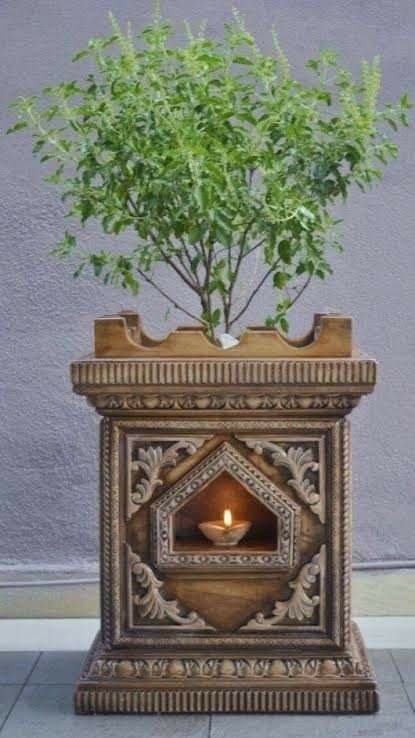
The rich brown finish gives this design an antique feel. The square pedestal has dense raised patterns on the front, with curling floral shapes around a pointed diya opening.
A small flame glows inside the central niche. Above it sits a thick decorative top with a ridged lower edge and a slightly uneven, raised planting rim.
Compared with the teal model in image 2, this version feels warmer and more traditional. The surface has several brown tones, with lighter areas along the carved edges that make the patterns easier to see.
The Tulsi plant is fairly tall and branches outward above the pedestal. Its green leaves provide a pleasant break from the deep brown body.
I can see a design like this working beside a cream-colored exterior wall, in a covered courtyard or along a veranda with traditional furniture.
If you’re choosing an antique-style finish, examine the corners and carved recesses closely. These spots collect dust and can be awkward to clean after watering. A soft brush may be useful for maintaining the decorative details.
You could pair this pedestal with a small brass-colored lamp or a restrained flower arrangement. The carved face already has plenty of texture, so there’s little reason to crowd it with extra accessories.
The photo doesn’t confirm the construction material or coating. For outdoor use, check whether the finish is weather-resistant and whether the planting container drains properly.
6. Black tulasi kota with flower garlands and a blue tiled border
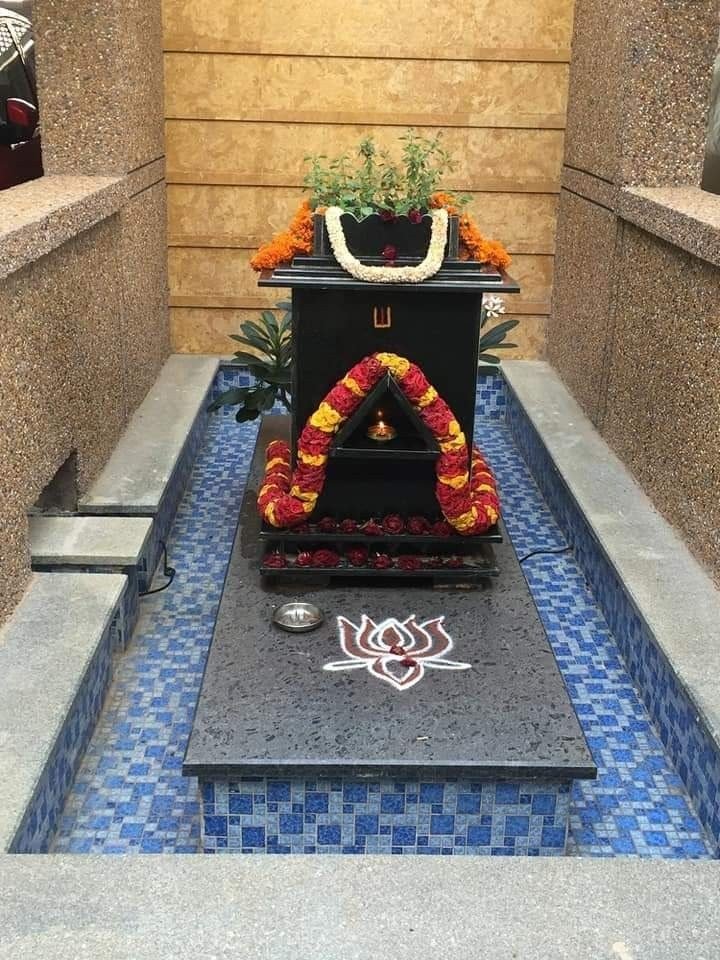
This design has a strong architectural setting. A black Tulsi pedestal stands at the far end of a narrow rectangular floor area, enclosed by textured stone-colored walls.
The pedestal is decorated with bright flower garlands. A large garland hangs across the front in an arch shape, while orange flowers frame the upper section. A small plant grows from the top.
The dark central floor has a broad blue mosaic-tile border. In front of the pedestal is a raised rectangular slab with a decorative white-and-red motif.
It’s a striking combination of black, blue and orange. The colors are strong, yet the arrangement remains orderly because everything follows the rectangular shape of the courtyard.
This is a useful reference if you’re planning a dedicated Tulsi area during a home renovation. A border of contrasting tiles can give the pedestal its own defined space, particularly in a narrow side courtyard.
Think about drainage before copying the sunken or bordered floor appearance. Water should drain away safely after rain and plant watering, and the surface needs to be comfortable to walk on.
For festivals, garlands can add color without changing the permanent structure. Just keep them clear of any open flame and remove flowers as they dry.
The black pedestal also provides a good background for bright decorations. Even a simple row of flowers could look effective here.
7. Low white tulasi kota for a warm garden courtyard
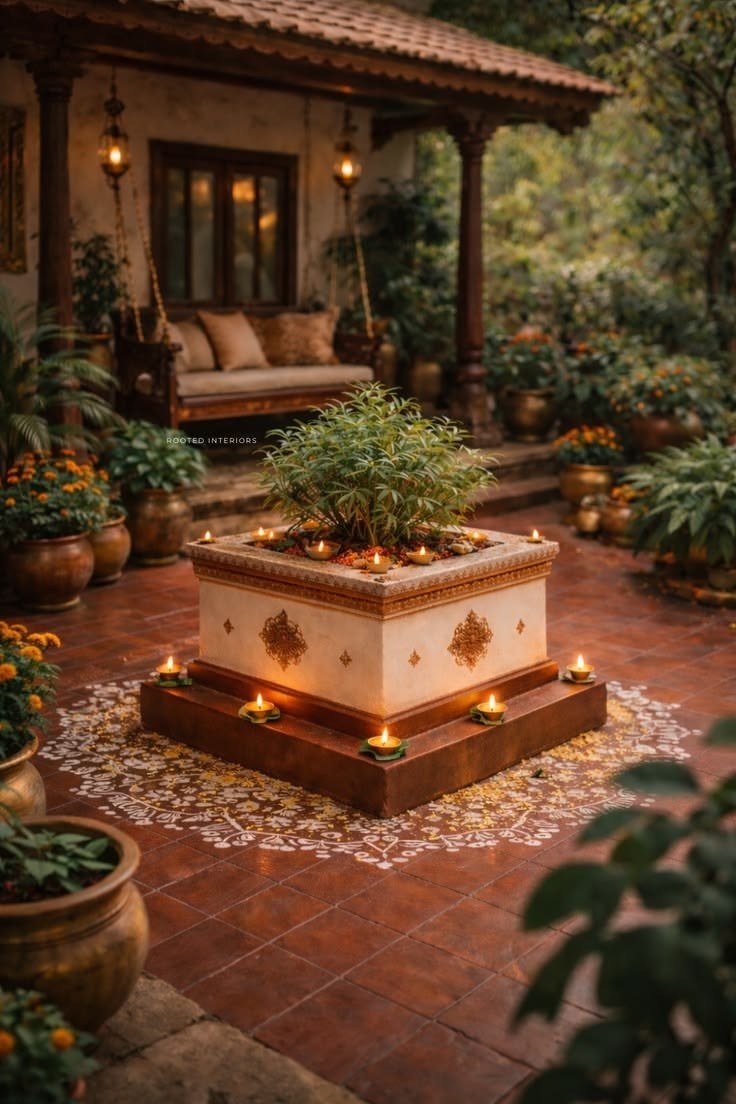
Here’s a softer, garden-friendly direction. The Tulsi plant grows in a low square pedestal with a pale cream or white finish. The upper edge has a warm-toned decorative band, while the lower body is broad and simple.
Small glowing diyas sit around the stepped base. The square structure is positioned on terracotta-colored paving, surrounded by leafy plants and potted flowers.
A roofed veranda with wooden pillars and a seating area appears in the background. The warm lighting gives the courtyard a calm evening atmosphere.
I particularly like the low height. It keeps the Tulsi shrub visually connected to the surrounding garden plants, and the wide base makes the arrangement feel settled into the courtyard.
If you have an open courtyard, this is a good design to study. A low square planting structure can become a permanent focal point without blocking the view across the garden.
The practical considerations are slightly different for a low pedestal. You need to keep the planting bed well drained, give the Tulsi enough root space and make sure water doesn’t collect around the base.
The photograph uses decorative lighting to make the edges glow. For everyday use, the same arrangement could be much simpler, with a few potted plants nearby and a clear path around the kota.
A wide, low design is also worth considering if you prefer a natural garden appearance over heavily carved temple-style architecture.
8. Small gray tulasi kota with hanging traditional lamps
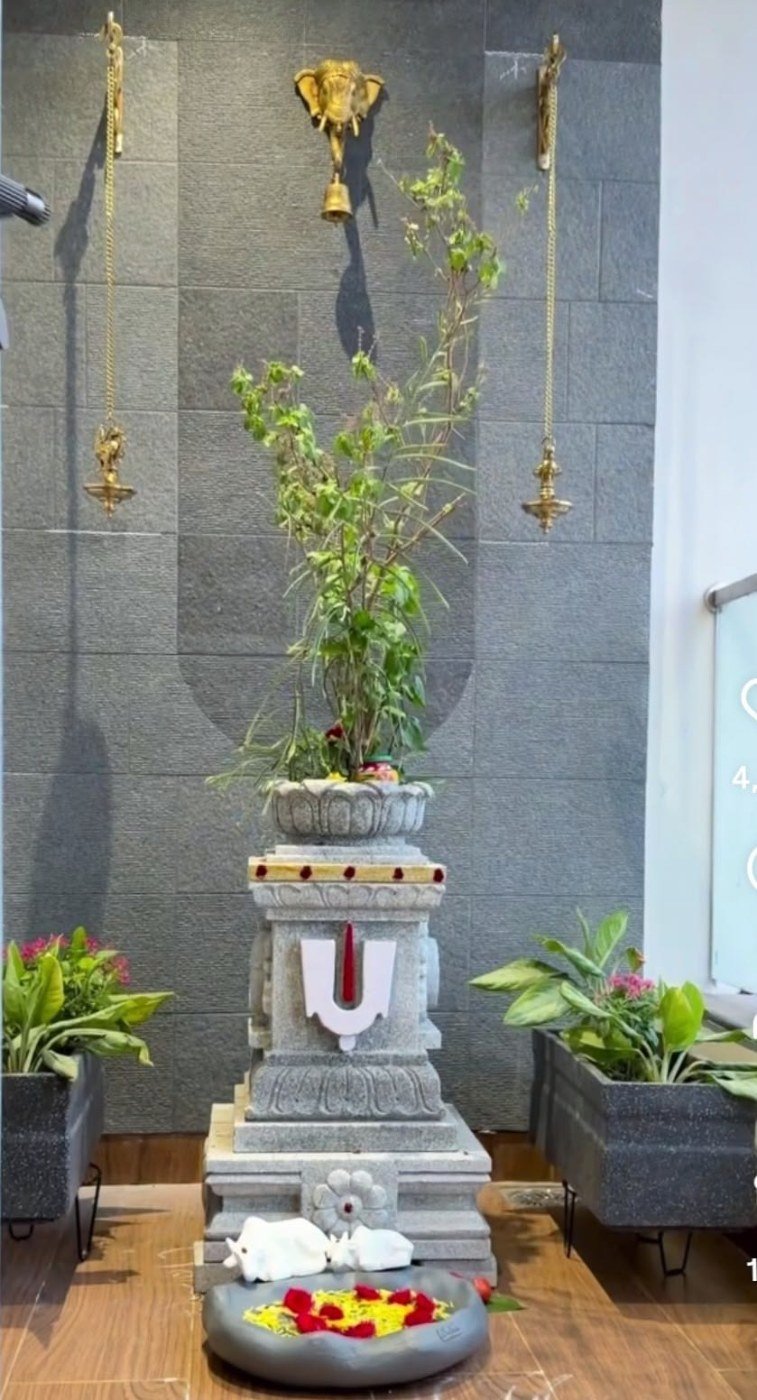
This tall, compact arrangement uses vertical space very well.
The Tulsi plant grows from a gray pedestal with a decorative top and a narrow central body. A white front panel has a red vertical marking, and the lower section includes a small ornamental face-like carving.
Behind the plant is a dark gray tiled wall. Several gold-toned hanging lamps or ornaments descend in front of it, adding height and a traditional pooja-room character.
At the bottom is a round bowl holding water or a reflective surface with floating flowers. Small planters sit on both sides of the pedestal.
The planting area itself appears fairly small. The Tulsi plant has a slender stem with light, branching growth, so the design looks delicate rather than heavy.
This idea could suit a narrow balcony end or a sheltered courtyard recess, provided the plant receives suitable sunlight and air circulation.
If you borrow the hanging-lamp arrangement, measure the clearance before installation. Leaves can spread as a Tulsi plant grows, and hanging decorations shouldn’t strike its branches.
The flower bowl is a lovely finishing touch for special occasions. Change the water regularly if you use one, especially outdoors where standing water can attract mosquitoes.
A background of plain dark tiles works well here. It makes the pale pedestal, golden ornaments and green plant easier to distinguish.
9. White marble-style tulasi kota with an Om motif and warm lighting
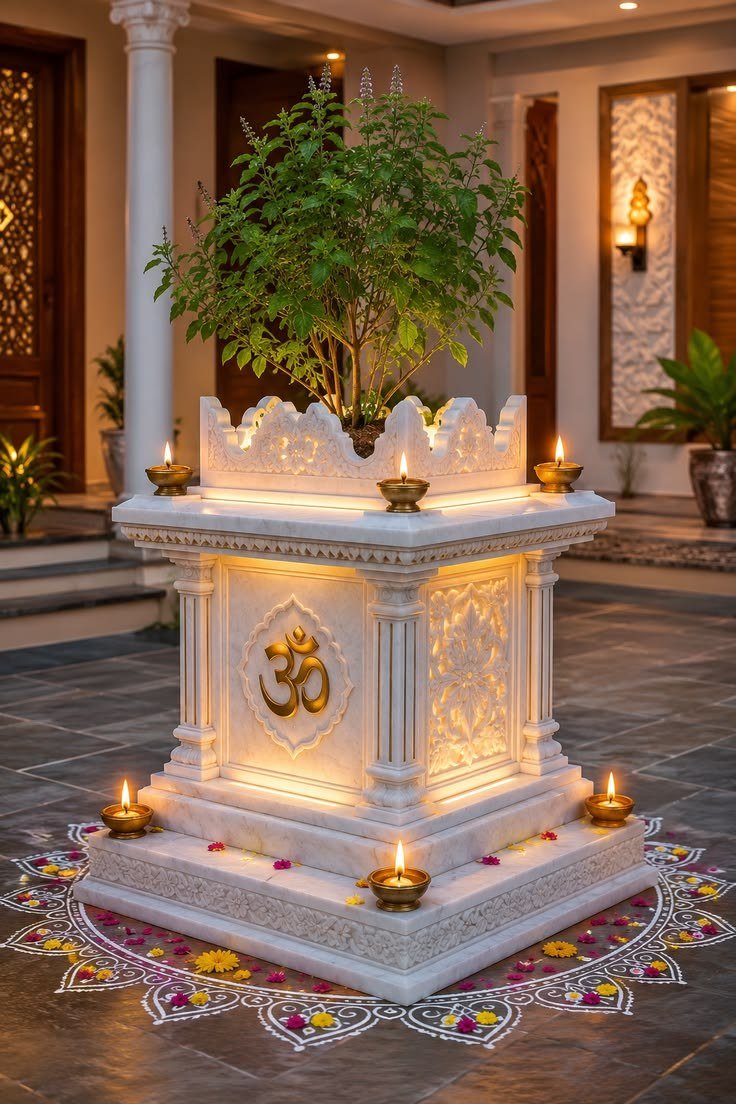
This is the most ornate white design in the collection.
A large square Tulsi pedestal sits on a broad raised platform. The body has a pale marble-like appearance, decorative corner details and warm golden lighting that shines through or around the ornamental areas.
A prominent Om symbol appears on the front. Small diyas are arranged around the upper edges and the lower platform, while colorful rangoli patterns frame the base.
The Tulsi plant itself is tall and leafy, spreading above the decorative structure. Its height balances the wide pedestal beneath it.
The surrounding architecture has pillars, warm wall lamps and a polished dark floor. It’s a grand setting, and the pedestal clearly acts as the central feature.
If you’re planning a dedicated Tulsi courtyard in a spacious home, this image provides several ideas: a raised square platform, a central symbol, carved corner panels and concealed-looking warm illumination.
The exact lighting method and pedestal material aren’t visible, so those details need to be confirmed with a builder or supplier. For any electrical lighting near an outdoor plant, use weather-appropriate fittings and arrange wiring safely away from watering areas.
I’d pay special attention to the proportions. The broad lower platform gives the tall upper structure a stable visual base. A smaller version could borrow the same stepped silhouette and single front symbol.
The rangoli and diyas work beautifully for celebrations. For regular use, the illuminated white pedestal would still have plenty of character on its own.
10. Small white tulasi kota with a fresh flower border
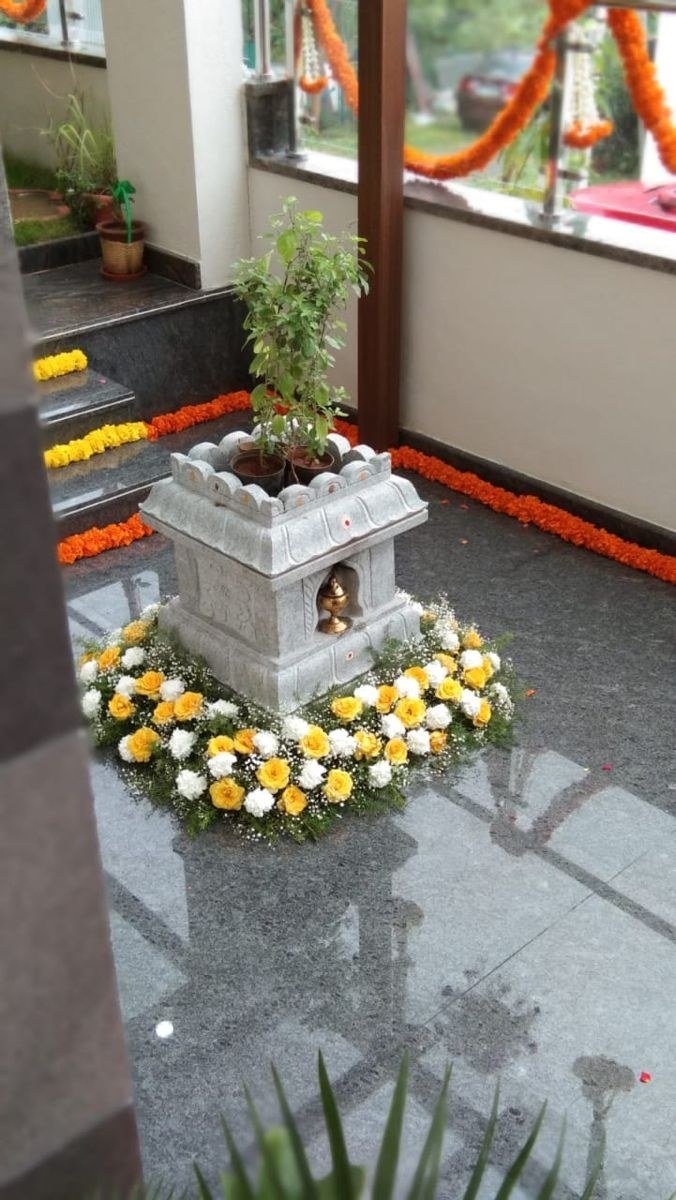
The final design is a compact white-gray Tulsi pedestal placed near a window in a clean, modern-looking corner.
It has a square upper planting section, a short body with a small front opening and a stepped base. The light surface has a stone-like appearance, though the material can’t be identified from the photograph.
A dense ring of white and yellow flowers surrounds the bottom. A few small red flowers appear near the plant, and orange garlands decorate the nearby steps and window area.
The floor is polished dark gray, creating a clear contrast with the pale pedestal and bright flowers. Light enters from the window, where a garland is visible along the upper edge.
This is a practical visual reference for someone working with a small footprint. The pedestal doesn’t require much surrounding furniture or additional architectural decoration.
If you want to copy the flower-ring effect, arrange flowers around the base while keeping the drainage area open. A removable tray or a washable surface underneath may make cleaning easier.
The window-side location looks attractive, but plant health still comes first. Tulsi generally prefers several hours of direct sunlight, so check the actual light reaching your chosen corner rather than relying on the presence of a window.
I also like the modest height of this pedestal. It would suit a simple daily pooja routine, and the flower border can be changed for festivals without altering the structure.
For a home with neutral flooring and limited space, this is one of the easiest looks in the collection to adapt.
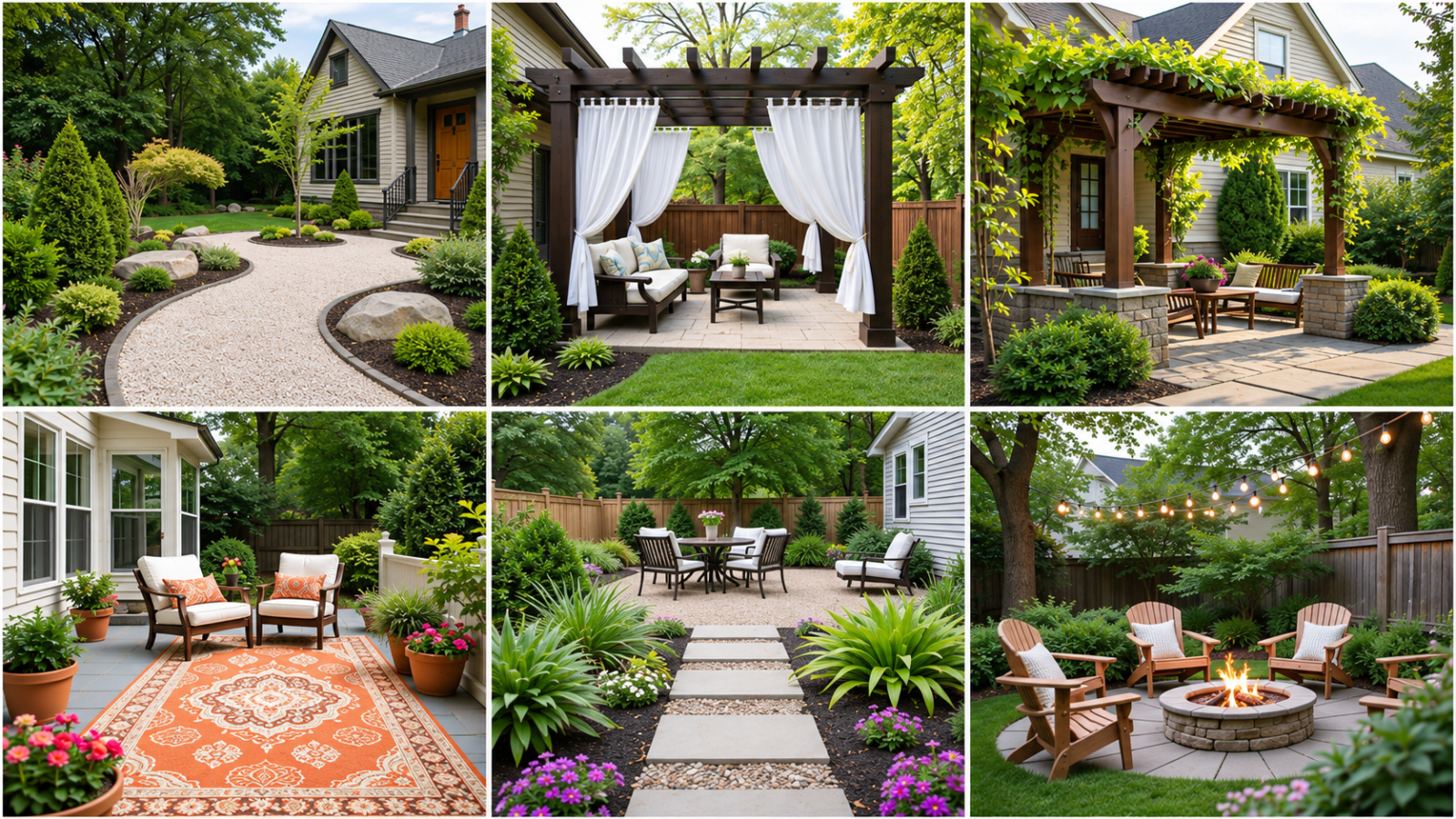
Also Check : 10 small backyard landscape design ideas that make a big difference
Conclusion
Choose your tulasi kota based on the space you actually have. A carved terracotta-colored pedestal looks lovely in a traditional courtyard, while a compact dark or white design can fit neatly against a balcony wall.
Before settling on a design, check the planting depth, drainage, sunlight and access for watering. If you want a diya niche, make sure there’s enough room to use it safely.
My pick for a small modern home is the teal pedestal in image 2. For a larger courtyard, the low cream-colored design in image 7 has a relaxed garden feel that’s hard to beat.







1 Comment